Not every World Cup strategy starts from the same place
Mitch Thompson
Co-Founder & CEO PandoPartner
Jun 09, 2026
Sponsorship
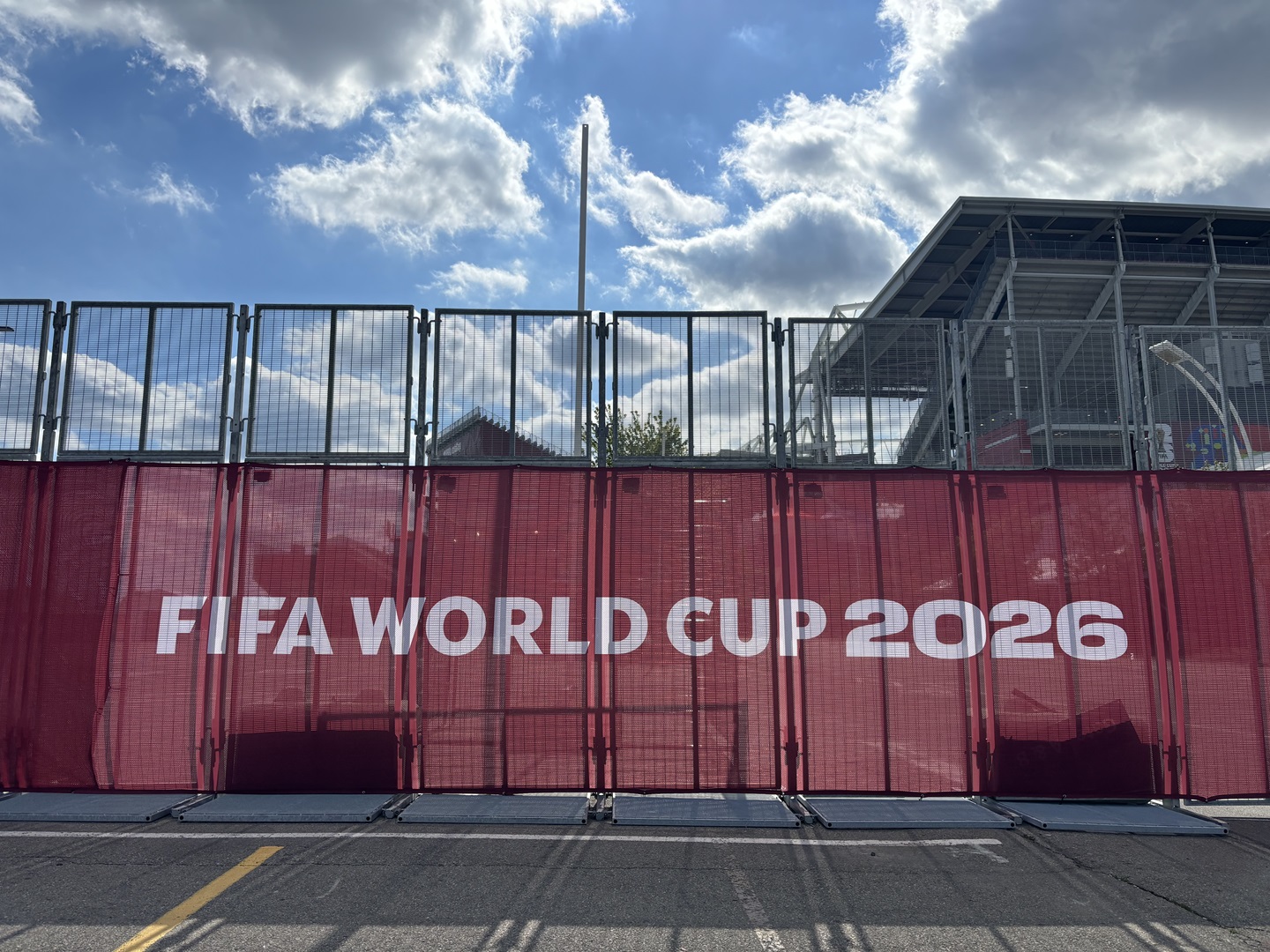
As the FIFA World Cup 2026 approaches, Canadians are going to be surrounded by soccer-focused brand activations and campaigns.
Some brands will show up as official FIFA sponsors. Others will activate through Canada Soccer, host cities, broadcasters, retailers or local events. Some may access the tournament through the commercial ecosystem of an official sponsor, such as a payment network, beverage supplier, distributor or retail partner. Others will have no official rights at all, but will still have a clear reason to build around the viewing occasions, summer gatherings and cultural energy the tournament creates.
The mistake is treating all of those brands the same.
A global FIFA sponsor, a Canada Soccer partner, a host city supporter, a sponsor’s channel partner and an unofficial brand are not playing the same game. They have different rights, different restrictions, different advantages and different business goals.
The better question is not just, “How do we show up around the World Cup?”
It’s, “What role can we credibly play, and what are we trying to achieve?”
Before diving into the strategy, here is a quick look at how layered the sponsorship ecosystem already is.
| Entity | Canada-Relevant Sponsors / supporters |
Canada Soccer | Nike, BMO, Allstate, TELUS, Visa, Volkswagen, Burnbrae Farms, Canadian Club, Dare / Bear Paws, Degree, EB Games, Ferrero, Frito-Lay, Gatorade, GE, General Mills, Haleon, Hellmann’s, Michelob Ultra, Maple Lodge Farms, Nerds, Samsung, Access Storage, Uber Eats, Walmart and Government of Canada. |
FIFA | FIFA Partners: adidas, Aramco, Coca-Cola, Hyundai / Kia, Lenovo, Qatar Airways and Visa. FIFA World Cup 26 sponsors/tournament sponsors: AB InBev, Bank of America, Frito-Lay, Hisense, McDonald’s, Mengniu Dairy, Unilever and Verizon. |
Toronto FWC26 / Fan Festival | Government of Canada, Government of Ontario, City of Toronto, Humber Polytechnic, OLG, OPG and Toronto FC. |
Vancouver FWC26 Host City Supporters | Musqueam Indian Band, Squamish Nation, Tsleil-Waututh Nation, Concord Pacific, Bell, Coca-Cola, PNE, Science World and TransLink. |
Global sponsors are building from scale
Source: CBC
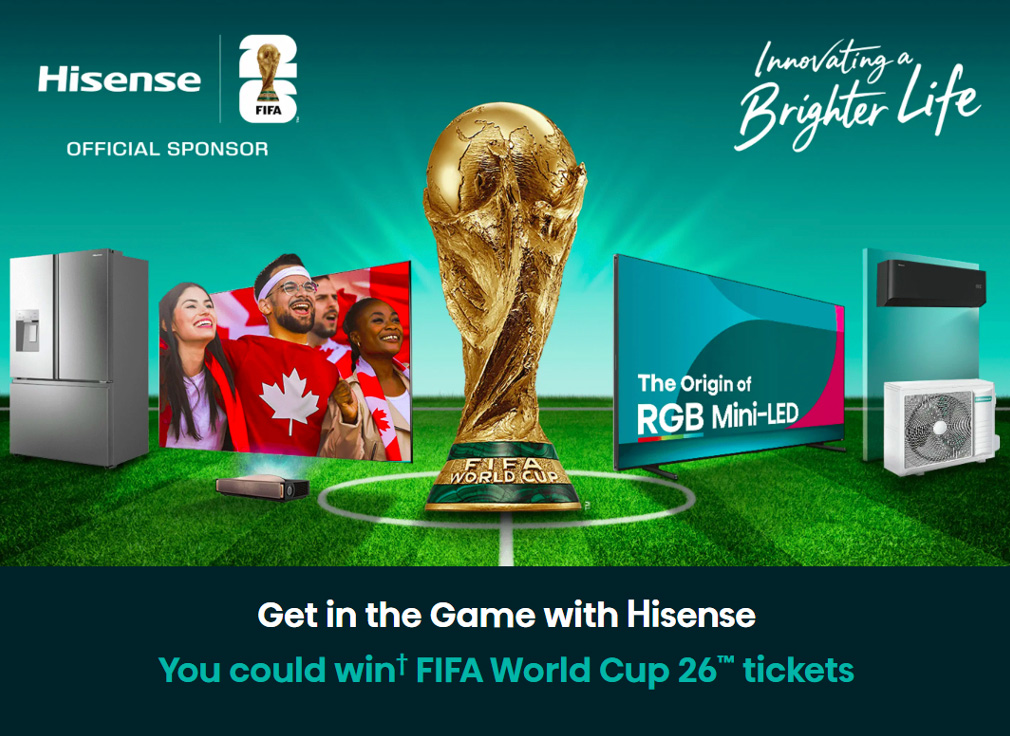
Source: Hisense
For brands with global FIFA rights, the World Cup is not just a Canadian campaign window. It is a global brand platform.
Hisense is a useful example. As an official sponsor of FIFA World Cup 2026, its opportunity is closely tied to the product experience of the tournament: screens, picture quality, viewing and the at-home fan experience. For a consumer electronics brand, the World Cup can become a product demonstration moment, not just an awareness play.
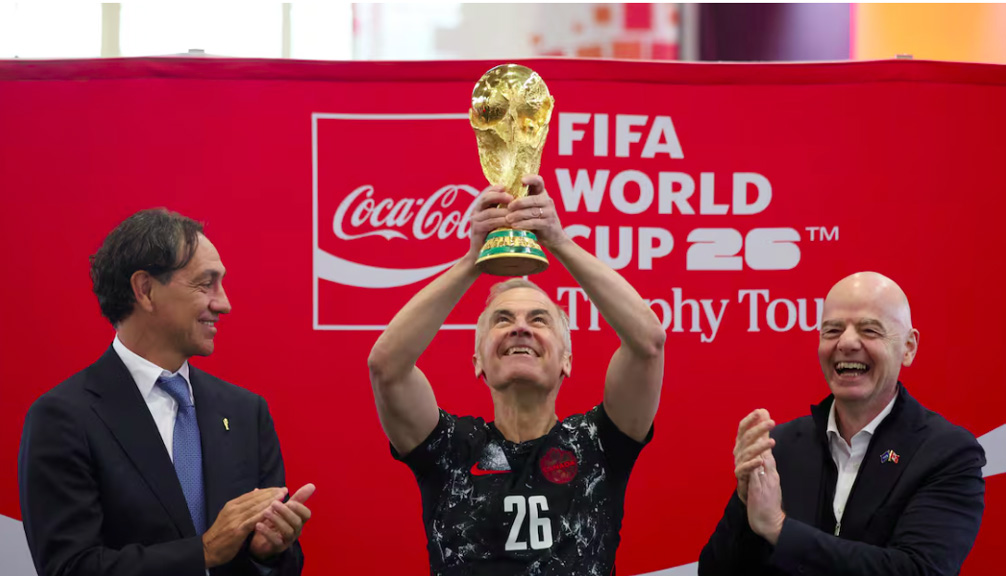
Coca-Cola has a different role. Its long-standing FIFA relationship allows it to build around global rituals: the Trophy Tour, collectible packaging, fan zones, prize promotions, watch-party occasions and the emotional side of the tournament. The brand does not need to explain why it belongs in the conversation. Its job is to turn broad tournament relevance into repeated moments of participation.
For global sponsors, success is often about scale, consistency and integration across markets. The Canadian campaign matters, but it sits inside a much larger global system.
Domestic soccer partners need a sharper Canadian angle
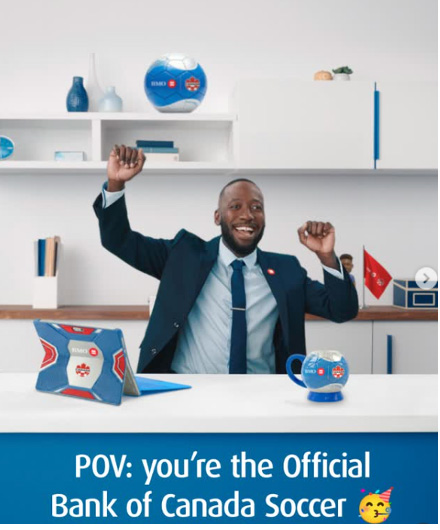
Source: BMO
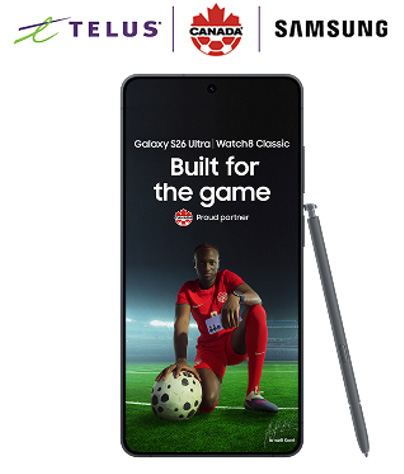
Source: TELUS
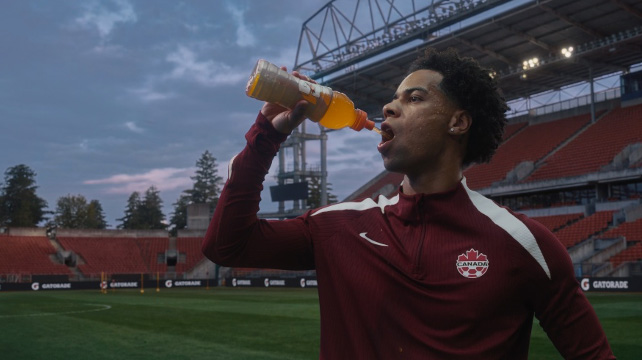
Source: Gatorade
Then there are brands that hold domestic rights through Canada Soccer or related Canadian soccer properties, but do not necessarily hold FIFA rights.
These brands can use Canada Soccer marks, national team connections, player storytelling, grassroots programming and Canadian fan pride. But they need to be careful about how they connect to the broader World Cup moment.
Samsung Canada is a good example. As the exclusive and official TV and mobile partner of Canada Soccer, Samsung has a credible link to how Canadian fans follow the national teams. Its opportunity is more tactical and bottom-of-funnel than a broad global FIFA sponsorship. It can lean into national team fandom, product utility and local retail behaviour in a way that is specific to Canada.
That is especially interesting because Hisense has the global FIFA relationship in the same broad consumer electronics category. Samsung’s Canadian strategy has to be built around a different rights position. It is not about acting like a FIFA sponsor. It is about using Canada Soccer rights well enough to create Canadian relevance, product salience and shopper momentum.
The same principle applies across other categories. Canada Soccer’s partner list includes brands across food, beverage, alcohol, delivery, consumer packaged goods and other everyday consumer categories. Those brands may not all have FIFA rights, but they can still build meaningful soccer strategies through national team association, grassroots relevance, retail activation, community programming and Canadian soccer culture.
Some brands can connect both layers
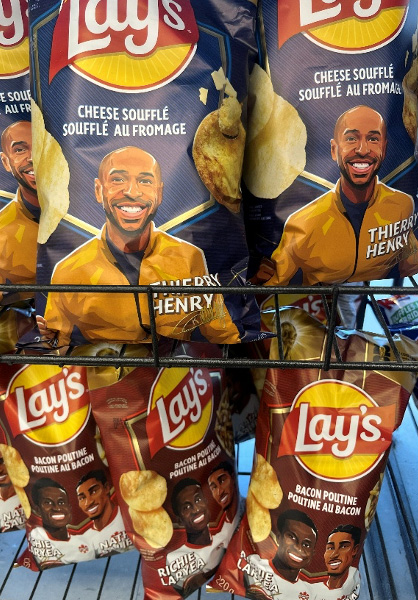
Source: Lays
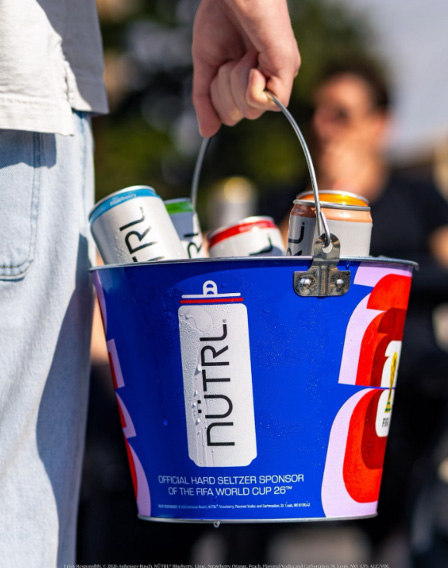
Source: Nutrl
There is also a more powerful version of this strategy: brands that can connect global FIFA rights with domestic soccer rights in the same market.
Visa appears in the FIFA global sponsorship ecosystem and is also listed as a Canada Soccer partner. That gives the brand more than one way to show up. It can participate in the global tournament platform while also building local relevance through Canadian soccer, national team storytelling, grassroots programming or fan engagement in Canada.
Frito-Lay is another interesting example. As part of the broader FIFA World Cup 2026 sponsorship ecosystem, the brand can connect to the tournament at scale. It also appears in Canada Soccer’s partner ecosystem, creating a pathway to more locally relevant activation through Canadian soccer moments, retail programs and national fan behaviour.
AB InBev offers a similar version of this across beer. Its global FIFA World Cup 2026 sponsorship gives it tournament-level visibility, while Michelob Ultra’s presence in Canada Soccer’s partner ecosystem can create a more Canadian soccer-specific layer. That combination gives the company room to connect broad tournament attention with national team fandom, retail, on-premise and viewing occasion activity. Global rights can create legitimacy and scale. Domestic rights can create proximity. The global platform helps a brand say, “We are part of the tournament.” The domestic platform helps it say, “We are part of soccer in this country.”
That combination can be more complete than either rights package on its own.
Pass-through rights create another path into the tournament
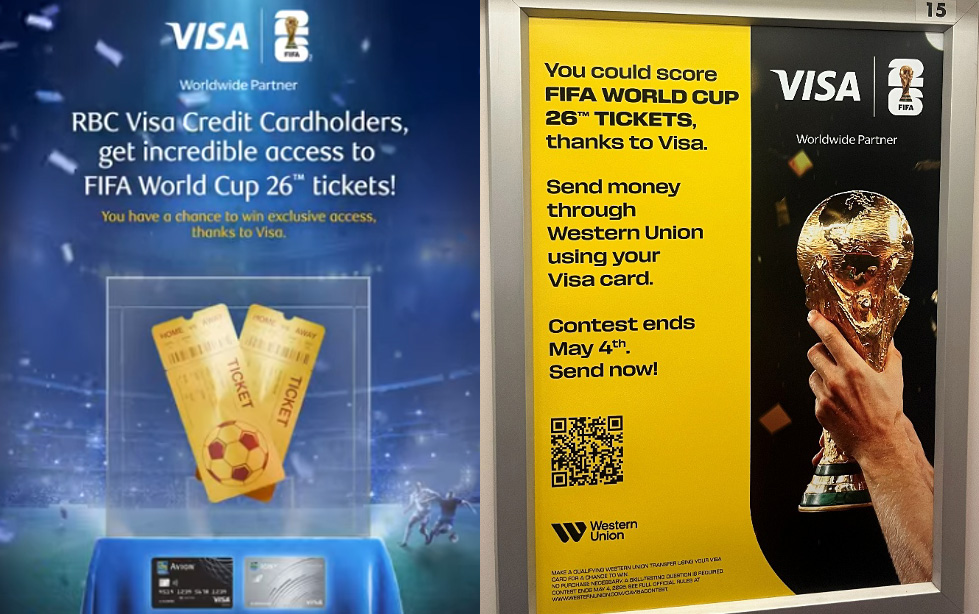
Source: RBC x VISA
There is another wrinkle that often gets missed: some brands may be able to access the tournament through a sponsor’s commercial ecosystem, even if they are not FIFA sponsors themselves.
In sponsorship, this is often referred to as leveraging pass-through rights.
Visa is a good example. As FIFA’s official payment technology partner, Visa can create promotions and access opportunities for cardholders, financial institutions and issuing partners. That can create a pathway for banks, payment partners and financial brands to participate through Visa’s rights, even when they do not hold FIFA rights directly.
RBC, Western Union and other Visa-connected financial brands may be able to build around access, payments, rewards, cardholder benefits or fan travel, depending on the rights and promotional terms available to them. Their path into the World Cup is not the same as Visa’s, but it may still be enabled by Visa’s official relationship.
A similar pattern can happen in other categories. AB InBev’s rights may create opportunities for Labatt to activate with major bar, restaurant and hospitality accounts.
Those accounts are not necessarily sponsors, but they may still become part of the consumer-facing activation through viewing parties, on-premise promotions, retail displays or game-day offers.
This is why the sponsorship ecosystem is bigger than the sponsor list. Official rights often flow through business relationships: issuer banks, distributors, retailers, restaurants, bars, hospitality partners and loyalty platforms.
For marketers, pass-through rights can create a valuable middle ground between direct sponsorship and unofficial marketing. They still require careful approvals and clear rules, but they can help brands participate in the commercial activity around the tournament without pretending to be official sponsors themselves.
Host cities create a local role
The World Cup will not only be experienced through match broadcasts. In Canada, it will also show up through host city events, fan festivals, public viewing, tourism activity and local business participation.
For some brands, the best role may be in the local fan experience: helping people gather, move around the city, discover events, participate in public celebrations or connect the tournament to the host community.
That makes host city participation more local, experiential and practical than a broad national campaign.
Unofficial brands still have room to play
The final group is brands with no official sponsorship rights.
These brands need to be careful. They cannot imply an official association with FIFA, the World Cup, Canada Soccer or national teams if they do not have those rights. But they can still respond to the broader cultural moment.
A restaurant can promote match-day viewing occasions. A retailer can build soccer-inspired shopping moments. A delivery platform can support hosting-at-home behaviour. A bank can speak to travel, newcomers, small business or community celebration. A beverage or snack brand can build around social viewing, summer gatherings and multicultural fandom.
The question for unofficial brands is not, “How close can we get to the marks?”
It’s, “What consumer behaviour will this event create, and how can we credibly serve it?”
Different rights positions require different measurement plans
The measurement plan should reflect the role the brand is actually playing.
Context | Strategic role | What success may look like |
Global FIFA sponsor | Own a broad tournament platform across markets | Global reach, brand lift, campaign recall, earned media, product association, retail or sales lift |
Domestic Canada Soccer partner | Build national relevance through Canadian soccer rights | Canadian awareness, national team association, content engagement, client hosting, retail traffic, lead generation, partner asset performance |
Rights-enabled channel partner | Activate through the commercial ecosystem of an official sponsor (“pass-through rights”) | Cardholder acquisition, account usage, promotion redemption, restaurant / bar traffic, retail lift, loyalty engagement, customer data capture |
Host city or local activation partner | Support the live fan experience in a specific market | Event attendance, sampling, local earned media, foot traffic, app usage, customer acquisition, community sentiment |
Unofficial brand | Tap into soccer-adjacent consumer behaviour without implying official rights | Social engagement, campaign participation, viewing occasion relevance, sales lift during match windows |
There is no single World Cup activation strategy.
There are different strategies shaped by rights, category, geography, consumer behaviour, corporate structure and business goals.
For marketers, the opportunity is not simply to be louder around the tournament. It is to be clearer about the role the brand can credibly play.
The strongest World Cup campaigns in Canada will likely come from brands that understand their lane, use their rights properly and measure success against the business outcome they were actually trying to influence.

LATEST PERSPECTIVES
|VIEW ALL